
Capital Structure Under Stress
An examination of balance sheet deformation during liquidity contractions and the systemic requirements for non-forced liquidation structures.
“Designing capital structures that endure across cycles.”
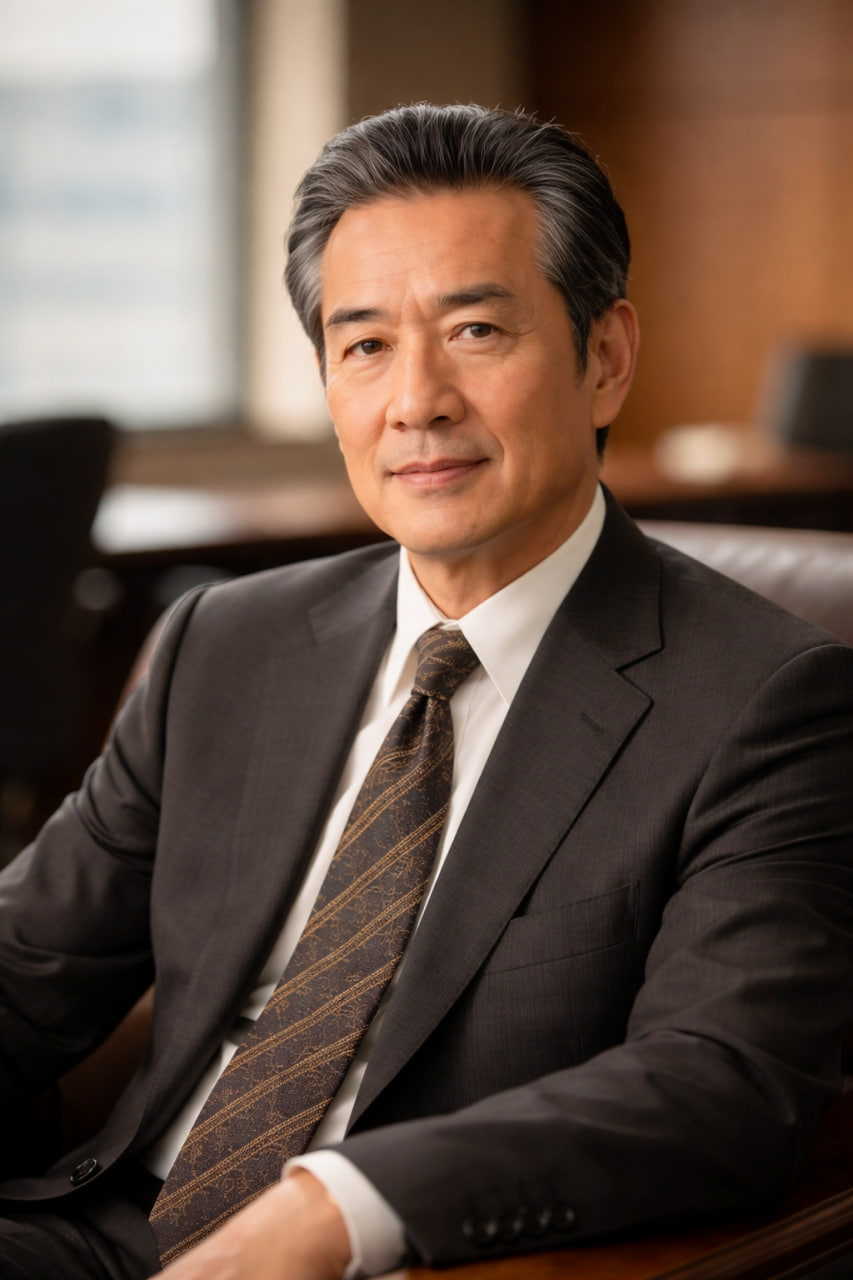
Born into a family of engineers in Singapore, his formative years coincided with Asia’s industrial integration into global manufacturing. Early on, he recognized that what truly determines outcomes is not isolated efficiency, but the structure of the entire system.
Enrolling at the National University of Singapore (NUS) in 1988, he majored in Electrical Engineering and Systems Control with a minor in Statistics and Decision Science. Rather than individual technological breakthroughs, his research concentrated on failure pathways within complex systems, risk amplification mechanisms under multiple interacting variables, and long-term stability versus short-term optimization.
Transitioning into financial infrastructure rather than conventional technology, he joined the Monetary Authority of Singapore (MAS) in 1992 in research and market surveillance—analyzing interbank settlement risk, foreign exchange clearing, and institutional contagion. There, he developed his core thesis: collapses originate not from price fluctuations, but from breakdowns in settlement, trust, and liquidity.
In 1996, he moved to the asset-liability management (ALM) division of a major European commercial bank in Switzerland, managing interest rate curves, maturity mismatches, and balance sheet solvency. Subsequent decades in Switzerland and Boston focused on multi-horizon allocation models for pension funds, insurance capital hedging, and foundation balance sheets.
Approaching digital assets through systemic implications rather than price speculation, his focus centered on decentralized settlement eliminating clearing risks, non-sovereign liquidity rails, and smart contracts reducing institutional friction.
Beginning in 2014, he established multi-asset digital risk models, custody protocols, and compliance frameworks for institutions, anchored by one unwavering principle: If an asset cannot be incorporated into a risk framework, it does not deserve a place in the portfolio.
Operating not on the trading floor, but in investment committees solving structural challenges across market regimes.
Engineering balance sheets and portfolio allocations capable of surviving monetary tightening, liquidity freezes, and multi-decade regime transitions without forced liquidations.
Establishing explainable, reviewable, and stress-tested decision protocols. Designing systemic risk mitigation frameworks and institutional veto mechanisms that precede return targets.
Designing mathematically and legally sound integration architectures bridging traditional asset-liability matching (ALM) with decentralized clearing, custody, and settlement infrastructure.
Internal investment committee doctrine governing risk, capital survivability, and systemic stress.
Risk is not volatility; it is an irreversible mistake. Capital must be insulated before it can participate in growth.
A well-constructed portfolio is one that can continue to exist even through the most difficult years.
Price fluctuations represent market liquidity variance; structural fragility causes permanent loss of capital.
The purpose of capital is to endure market cycles, not simply to chase short-term market peaks.
Methodology I
Portfolios are structured to endure multi-decade macro transitions, inflation regimes, and structural realignments. We avoid rotating investment fads and short-term forecasting in favor of balance sheet durability.
Methodology II
Rigorous stress-testing of liquidity thresholds, non-linear correlation cascades, and counterparty contagion. If the market were to fail, we design portfolio structures so that failure pathways are pre-insulated.
Methodology III
Operating with fiduciary precision within real-world regulatory boundaries, liability redemption horizons, and investment committee governance mandates. Constraints are treated as design parameters, not obstacles.
An investment platform established to integrate traditional capital structures with emerging financial infrastructure.
Founded in 2018 in Singapore by Darian Vale Koh. Rather than a conventional fund, Aurora Ridge was established as a disciplined investment platform focused on long-term capital design, multi-asset coordination, and risk-first capital strategies.
A deliberately selective multidisciplinary structure integrating engineering systems control, traditional asset allocation, and digital compliance experts. All capital allocations are governed by committee-driven consensus, transparency, and explicit veto mandates.
Low-frequency institutional memoranda (2–4 publications annually) exploring structural liquidity, balance sheet stress, and settlement rails.
An examination of balance sheet deformation during liquidity contractions and the systemic requirements for non-forced liquidation structures.
Analyzing the illusion of secondary market depth and the structural transmission of liquidity freezes across interconnected asset classes.
Deconstructing blockchain protocols as verifiable institutional clearing and collateral infrastructure rather than speculative trading instruments.
“Darian engages selectively with institutions, family offices, and long-term partners.”
arianValeKohVP@auroraridgepro.com